Thinking Why a Messenger Should Not Ask for Your Phone Number
The phone number and the address book are the two things most messengers take first. A private messenger should take neither, and here is what that costs and what it buys.
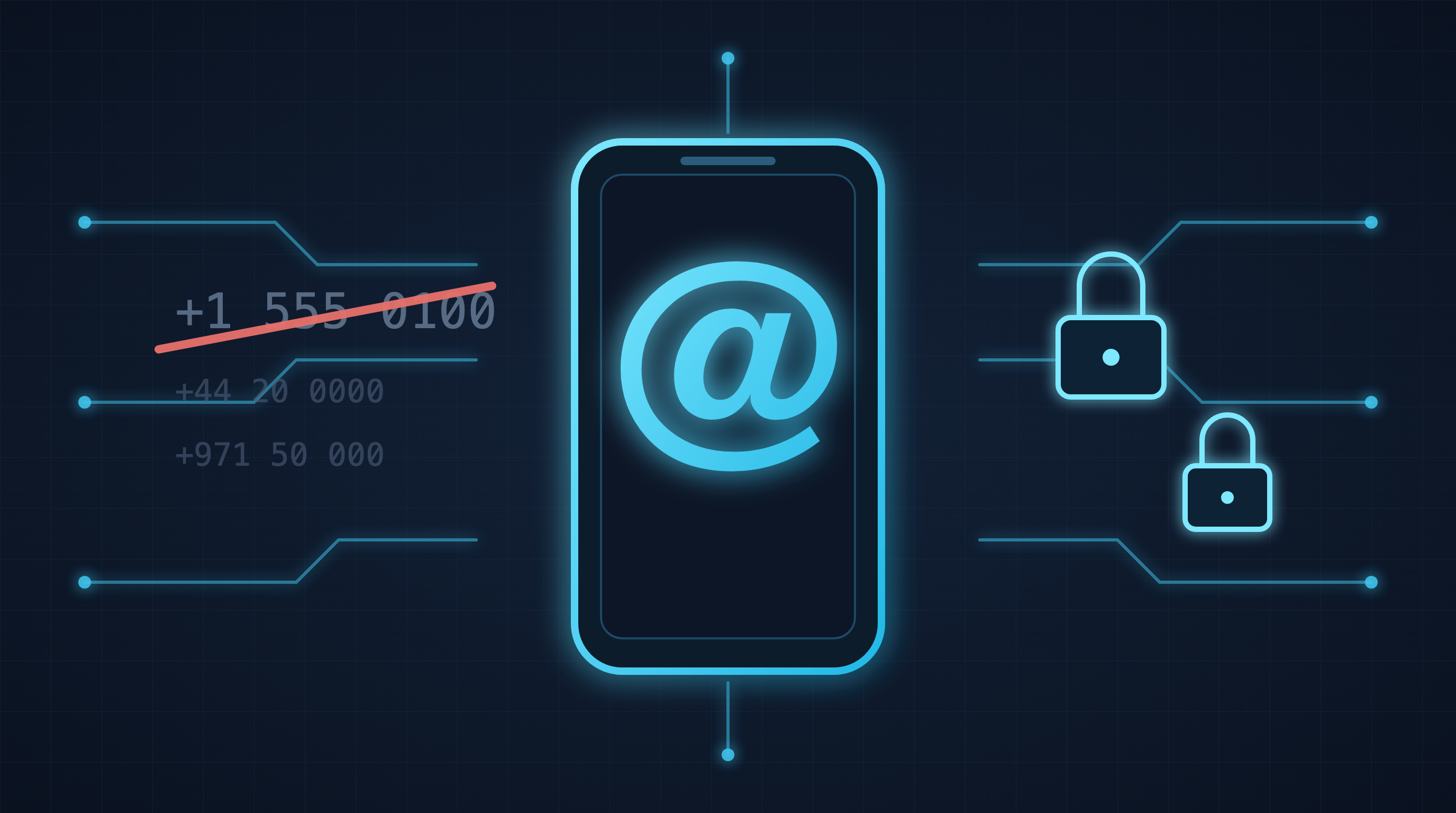
Most messengers open the same way: type your phone number, we will text you a code, and would you like to share your contacts? It feels harmless because everyone does it. I think it is the single worst design decision a private messenger can inherit, and when we built OvateChat at Ovate Technologies we refused it on day one.
A phone number is an identity you do not control
Your number is issued by a carrier, tied to a government ID in most countries, printed on forms, and recycled when you stop paying. It is the key to your bank's two-factor codes and, through SIM swapping, the key that attackers go after first. Making it the login to a private conversation welds that conversation to the least private identifier you own.
The address book is other people's data
When an app asks for your contacts, you are not only sharing your own data. You are handing over the numbers of everyone who trusted you with theirs, people who never agreed to anything. Even a hashed upload leaks: the space of phone numbers is small enough to reverse. An app that never asks for the address book has nothing to leak, nothing to be subpoenaed, and nothing to be sold.
What we did instead
OvateChat asks for a username and an email. The username is how people find you, if you let them: discovery is a switch, not a default, and a stranger who finds you still has to pass a message request. The email exists for account recovery and nothing else. No contact upload, no "people you may know", and the server could not build a social graph from your phone even if it wanted to, because it never sees the phone's contents.
What this costs
Honesty requires saying what you give up. There is no magic moment where the app tells you that twenty of your contacts already use it. You have to tell people your username, the way you once told them your number. For most people that is a sentence in a conversation they were already having, and in exchange the app knows nothing about who they know.
The rule behind the rule
The phone number question is one instance of the only question that matters when you design for privacy: what does the server have to know to do its job? A relay for encrypted messages has to know which device to deliver to. It does not have to know your number, your contacts, or your content. Everything we removed, we removed by asking that question and refusing to accept "because everyone collects it" as an answer.